
A Maine September: Dhikr Khafi

Farewells etch caverns in the heart.
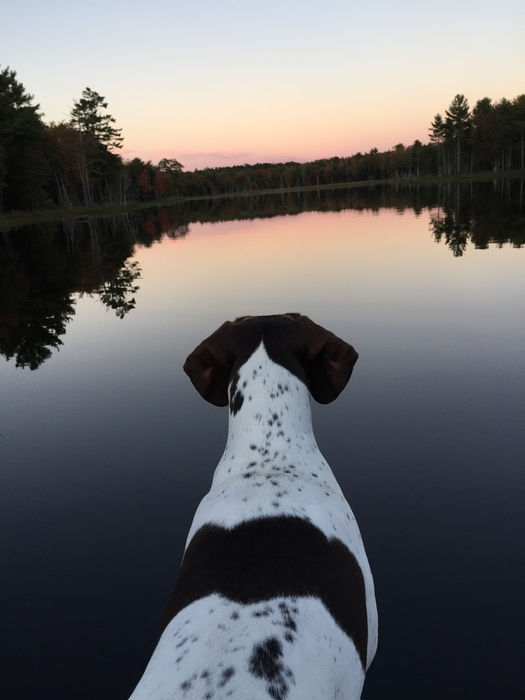
September 2026, Waldoboro, Maine
As sunrise ignites the trees on the east side of Moose Meadow Pond, a barred owl’s gentle wail echoes along the glacier slope. The tamarack leaves a pastel yellow, translucent through the mist. This visit is another goodbye.
Farewells etch caverns in the heart that echo a lifetime of remembrances embedded in your soul. After goodbyes, scents and colors and textures open those caverns, echoing between decades of friendship.
You often told me about glacial erratics—pegmatite granite basalt and diabase—how the fine-grained volcanic rocks originated from ancient local levees or tumbled from northern volcanic zones, and how the glaciers moved northwest to the southeast, and the pond, east to west. You’d guide me through your rock collection and show me the quartz spirals from a rock you split in two, probably millions of years old.
Abandoned by the ice age, these glacial ridges of gravelly eskers and moraines act as giant, earthly walls that create a basin for the pond. Magical things happen within it.
A ghostly silver mist dances along the water, where thermal currents collide and whisper to a slightly warmer pond surface, and the entire blanket appears to breathe and spin like a Sufi dervish, a morning dhikr chanted in vapor. Slivers of dawn amber cut into reflections, stippling the mist into a vibrant hue, like a water lily prism blooming along the water.
Last July when I visited, the Canada geese that frequent the pond were busy teaching their goslings to fly. Now, here in September this year, the geese huddle in small family groups rather than join the massive migrating flocks exploding across the sky. This year they are lazy. They loiter in the tidal mudflats, the human equivalent of a hot tub, and drink, eat, preen, and nap. I see them on the opposite side of the pond where it’s muddier, partly obscured in the woolgrass to hide from the bald eagles that have recently proliferated along the trees. Three geese sit pruning on Eagle Rock, occasionally squawking at others that attempt to join them on a rock only built for three.
The trees morphed to bright reds and yellows across the pond since I arrived, and each day brings richer colors. On my walks, a sea breeze hails from the east, seasoned with a sweet tang as the currents beat against the rockweed, releasing seaweed dictyopterenes—pheromones bathed in a potent, herbal-musky scent. Wind across the midcoast, spices that settle on the senses, a bit more eclectic with each breeze. An easterly current blowing through harbors of Rockland, Boothbay, or Camden might carry the poignant scent of salted herring and bait barrels lying on the lobstering wharves, and as that breeze meets the shoreline, it blends with dense spruce fir and pine forests along the pond line.
Then, like magic, that scent changes again as the dampness in the sea air makes the trees release a dense, resinous essence, transforming the breeze into a complex amalgam of briny salt and rich pine. Yellow birch growing in the wet, boggy parts of the pond release a crisp wintergreen aroma when the wind is powerful enough to sever small branches.
One year, you presented me with an eastern hop-hornbeam (ironwood) hiking staff you had crafted, wood so impenetrable it dulled the sharpest knives. You told me it grows broadly in Maine's upland forests, often next to sugar maple, red oak, and ash, yet it was something I would never notice hiking the coastal trails. That same staff has traveled across multiple terrains in the last twenty years, yet it holds few scars along its iron surface, only memories.
Behind my eyes, our barge rides up and down the pond, east to west, west to east, riding the floating, motorized dock into the sunset as Gunther the hound barked at the fish. The years we stood on the shore and cast our lines into the pond, a pond so under-fished that bass leaped from the water to seize our bait before the worm ever sank into the water. A great blue heron lingered close by, expecting handouts as whirligig beetles spun in lunatic circles, forever creating swirls on the calm pond surface. Brilliant red autumn meadowhawk skimmer dragonflies darted around us, shifting quickly in multiple directions as they plucked flies from the air, monarch butterflies feasting on goldenrod and milkweed blooms covering the shore.
Now I notice stray oak branches drift from a beaver hut under construction, the work in progress a nest of thick, spiked limbs stripped from a now rotten oak toppled over at the waterline. The beavers had gnawed at the roots, deep within the glacier soil, cutting off nutrients until the tree succumbed to rot and tumbled to the shore kindling.
On my last night at dusk, we sat on the porch and watched the beavers stray from their hut, their knotted heads exposed like tree branches, circling the perimeter then disappearing, only to reappear in a different place on the water. Later, they moved to shore, and we saw how incredibly plump they were. They rolled on the pond's edge like children, wiping their snouts with tiny paws.
After dinner, you showed me an encrusted, pitted steel hatchet blade you found along the Presumpscot clay, one beveled edge a former shadow of what it once was, a softball-sized granite rock, a rusted horseshoe, and oxidized strips of iron siding from a long-ago horse carriage. What remained of the day burned in the windows, then faded.
Dhikr khafi, friend.


Comments